Literarisches & Journalistisches

Meta soll Studie zu psychischen Schäden vertuscht haben
23. November, 2025Weniger Depression, Angst, Einsamkeit, schon nach einer Woche Social-Media-Abstinenz: Das geht laut Gerichtsakten aus einer Studie hervor, die Meta abgebrochen hat. Der Konzern weist die Vorwürfe zurück.

Die politische Integration Europas ist so überlebenswichtig wie nie. Und sehr unwahrscheinlich. Eine bittere Bilanz von Jürgen Habermas.

Strafgerichtshof ersetzt Microsoft durch deutsche Lösung
30. Oktober, 2025Bruch mit Symbolkraft: Aus Angst vor Sanktionen ersetzt der Internationale Strafgerichtshof US-Technologie mit einem Paket aus Deutschland – und könnte damit am Beginn eines Trends stehen.

Der neue Reaktionär - Curtis Yarvin und die Versuchung der smarten Tyrannei
28. September, 2025Der Philosoph Curtis Yarvi wünscht sich einen amerikanischen Autokraten. Seine autoritären Ideen treffen den Nerv der Zeit - und beeinflussen etwa J.D. Vance.

AI Tools in Society: Impacts on Cognitive Offloading and the Future of Critical Thinking.
10. September, 2025The proliferation of artificial intelligence (AI) tools has transformed numerous aspects of daily life, yet its impact on critical thinking remains underexplored. This study investigates the relationship between AI tool usage and critical thinking skills, focusing on cognitive offloading as a mediating factor. Utilising a mixed-method approach, we conducted surveys and in-depth interviews with 666 participants across diverse age groups and educational backgrounds. Quantitative data were analysed using ANOVA and correlation analysis, while qualitative insights were obtained through thematic analysis of interview transcripts. The findings revealed a significant negative correlation between frequent AI tool usage and critical thinking abilities, mediated by increased cognitive offloading. Younger participants exhibited higher dependence on AI tools and lower critical thinking scores compared to older participants. Furthermore, higher educational attainment was associated with better critical thinking skills, regardless of AI usage. These results highlight the potential cognitive costs of AI tool reliance, emphasising the need for educational strategies that promote critical engagement with AI technologies. This study contributes to the growing discourse on AI's cognitive implications, offering practical recommendations for mitigating its adverse effects on critical thinking. The findings underscore the importance of fostering critical thinking in an AI-driven world, making this research essential reading for educators, policymakers, and technologists.

SCHUFA Risiko- und Kredit-Kompass
02. September, 2025Wir stellen zentrale Kennzahlen zum Kreditverhalten von Unternehmen und Privatpersonen in der Corona-Krise zur Verfügung.

The ‘godfather of AI’ reveals the only way humanity can survive superintelligent AI | CNN Business
13. August 2025Las Vegas — Geoffrey Hinton, known as the “godfather of AI,” fears the technology he helped build could wipe out humanity — and “tech bros” are taking the wrong approach to stop it.

Europe to launch Eurosky to regain digital control - CADE – Civil Society Alliances for Digital Empowerment
17. Juli, 2025Europe launches Eurosky to reduce tech reliance on the U.S. and boost digital sovereignty. Europe is taking steps to assert its digital independence by launching the Eurosky initiative, a government-backed project to reduce reliance on US tech giants. Eurosky seeks to build European infrastructure for social media platforms and promote digital sovereignty. The goal is to ensure that the continent’s digital space is governed by European laws, values, and rules, rather than being subject to the influence of foreign companies or governments.

Simone und Malcolm Collins wollen so viele Kinder in die Welt setzen, wie sie können. Sie sind „Pronatalisten“, so wie Elon Musk. Ein Besuch

US-Tech-Milliardäre wollen eine gentechnisch selektierte Nachkommenschaft. Hinter der Rhetorik von der Rettung der Menschheit steht ein kaum versteckter Rassismus: Nur die Besten sollen sich vermehren.

In a 2021 speech entitled ‘The Universities are the enemy,’ Vice President JD Vance laid out a plan for America’s universities saying in part “we have to honestly and aggressively attack the universities in this country.” Columbia University has become ground zero for the Trump administration's war on higher education. Following a year of pro-Palestinian protest on campus, Trump revoked $400-million in funding and has instructed federal agents to oversee raids on campus, looking to deport international students and permanent residents that have been involved in protest. Joseph Howley is a professor at Columbia and joins the show to discuss the last year and a half on campus, at a time students are being hunted, and some feel the university has capitulated to the demands of a hostile government.
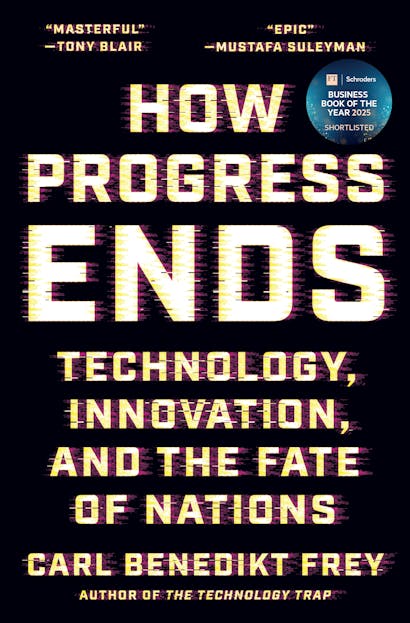
In How Progress Ends, Carl Benedikt Frey challenges the conventional belief that economic and technological progress is inevitable. For most of human history, stagnation was the norm, and even today progress and prosperity in the world’s largest, most advanced economies—the United States and China—have fallen short of expectations. To appreciate why we cannot depend on any AI-fueled great leap forward, Frey offers a remarkable and fascinating journey across the globe, spanning the past 1,000 years, to explain why some societies flourish and others fail in the wake of rapid technological change.

SEE.EU is a concrete and mature new concept for the European media landscape. Our vision: a shared digital space where trustworthy news from licensed public broadcasters across Europe is accessible to everyone – multilingual, transparent, and aligned to European values and data laws. Making quality journalism available to all Europeans – in their own language, from verified sources, across borders.
Macht und Gewalt der neuen Fürsten. 2026. 978-3-406-83821-7. Der SPIEGEL-Bestsellerautor Giuliano da Empoli unternimmt in seinem neuen Buch eine genauso fesselnd…

Neo-Integralismus – Eine Gefahr für die liberale Demokratie
23. Februar 2024Der katholische Neo-Integralismus ist eine intellektuelle Bewegung, der junge, konservative katholische Theologen, Mitgliedern des Klerus und bekannte Intellektuelle anhängen. Die Ideologie zielt auf die Unterwerfung des Staates unter die Autorität der katholischen Kirche ab – und verbreitet sich derzeit dynamisch in Europa und den USA. Neo-Integralisten hängen vielfach Verschwörungstheorien an und sehen den Liberalismus als Bedrohung. Konservative und Christdemokraten können nicht einfach hoffen, dass der Neo-Integralismus von allein wieder verschwindet.

Diskriminierung: AMS erntet Hohn mit neuem KI-Chatbot
5. Januar 2024Der österreichische Arbeitsmarktservice hat einen auf ChatGPT basierenden

The Techno-Optimist Manifesto | Andreessen Horowitz
16. Oktober 2023We are told that technology is on the brink of ruining everything. But we are being lied to, and the truth is so much better. Marc Andreessen presents his techno-optimist vision for the future.
The Normative Power of Artificial Intelligence
11. Oktober, 2023Artificial intelligence technologies are spreading across society. Generative systems, such as ChatGPT and DALL-E, provide only some examples of the expanding consumption and commodification of artificial intelligence applications in daily life. Nonetheless, the extensive trust and reliance on these technologies in public and private sectors is raising questions for the rule of law. Artificial intelligence technologies are not only mere tools which challenge the protection of fundamental rights when these systems moderate online speech, check employment performances in the workplace, and evaluate credit scores. Particularly, machine learning technologies also contribute to creating norms and rules shaping the enforcement of their functions, thus defining another generative layer of normativity competing with the rule of law in the algorithmic society. This work argues that artificial intelligence systems, particularly machine learning, develop norms by experience and learning within an opaque, technical space. The norms governing these systems are not always immutable but shaped across time. In the algorithmic society, code is not only law but also a source of law. The consolidation of this normative power, or the rule of tech, raises questions for constitutional democracies that are already struggling with solutions to limit other forms of normativity, primarily the predominance of online platforms in the setting of transnational private standards. This plurality of sources has put the rule of law under pressure. The expansion of the rule of tech as a source of norms leads to addressing the spaces for the rule of law and the limits of powers in the algorithmic society, as underlined by the European regulatory approach on artificial intelligence. Within this framework, this work analyses the challenges raised by the normative power of artificial intelligence systems and examines the spaces for the rule of law in the algorithmic society.
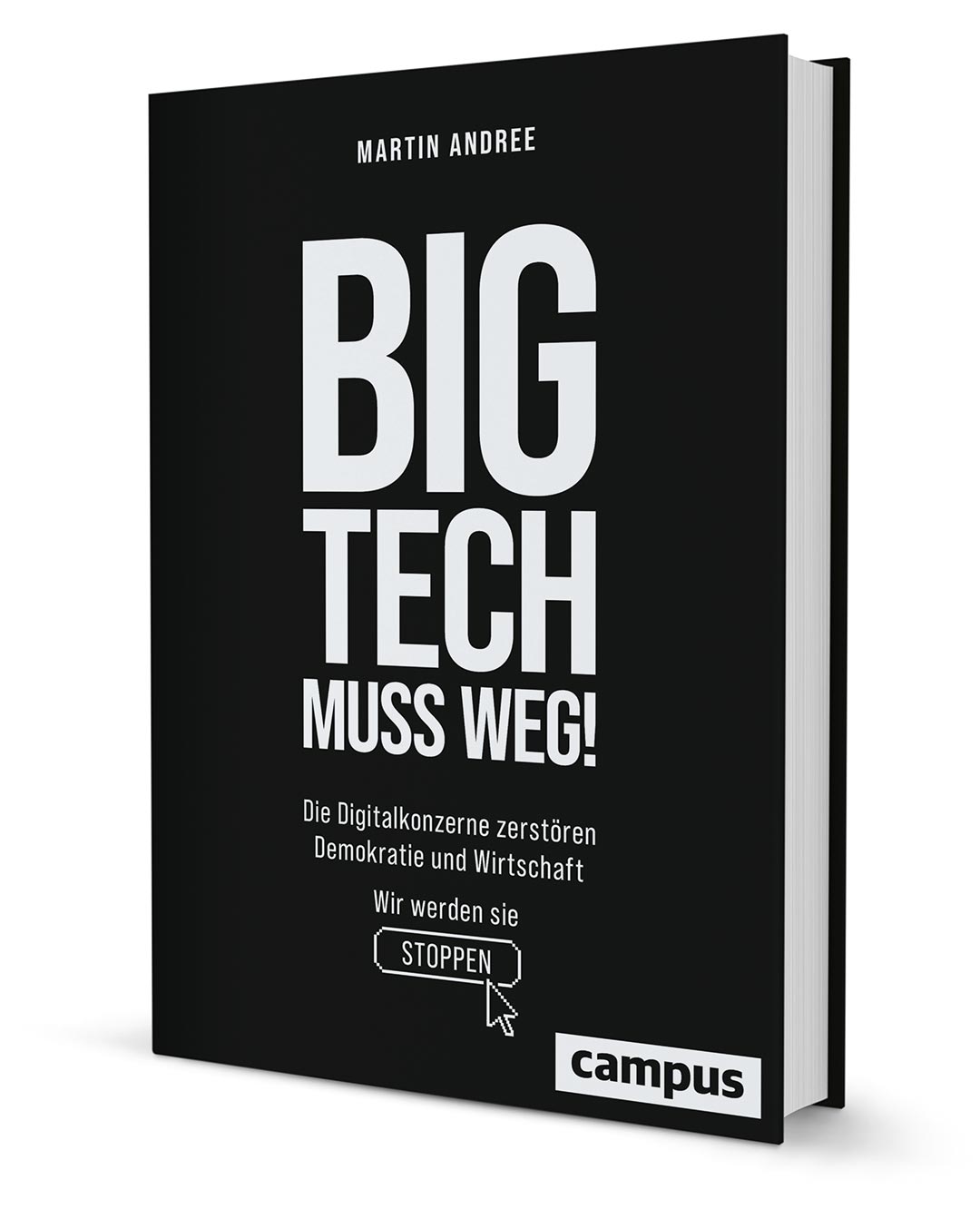
Digitale Monopole bringen immer größere Teile unserer Lebenswelt unter ihre Kontrolle. Die Plattformen dominieren zunehmend die politische Meinungsbildung und schaffen zugleich unsere freie Marktwirtschaft ab. Digitalexperte Martin Andree zeigt messerscharf, wie weit die feindliche Übernahme unserer Gesellschaft durch die Tech-Giganten schon fortgeschritten ist – und wie wir uns das Internet zurückerobern können.

The Dutch tax authority ruined thousands of lives after using an algorithm to spot suspected benefits fraud — and critics say there is little stopping it from happening again.

In zehn hochkonzentrierten Kapiteln legt Juliane Rebentisch Hannah Arendts politische Philosophie der Pluralität frei und diskutiert sie im Horizont gegenwärtiger Debatten. Politik und Wahrheit, Flucht und Staatenlosigkeit, Sklaverei und Rassismus, Kolonialismus und Nationalsozialismus, Moral und Erziehung, Diskriminierung und Identität sowie Kapitalismus und Demokratie sind die Stichworte der entsprechenden Auseinandersetzungen. Indem sie den Fokus auf das Motiv der Pluralität legt, lässt Rebentisch in diesen unterschiedlichen thematischen Kontexten jeweils den Zusammenhang von Arendts Gesamtwerk ebenso greifbar werden wie die Widersprüche, die es durchziehen.
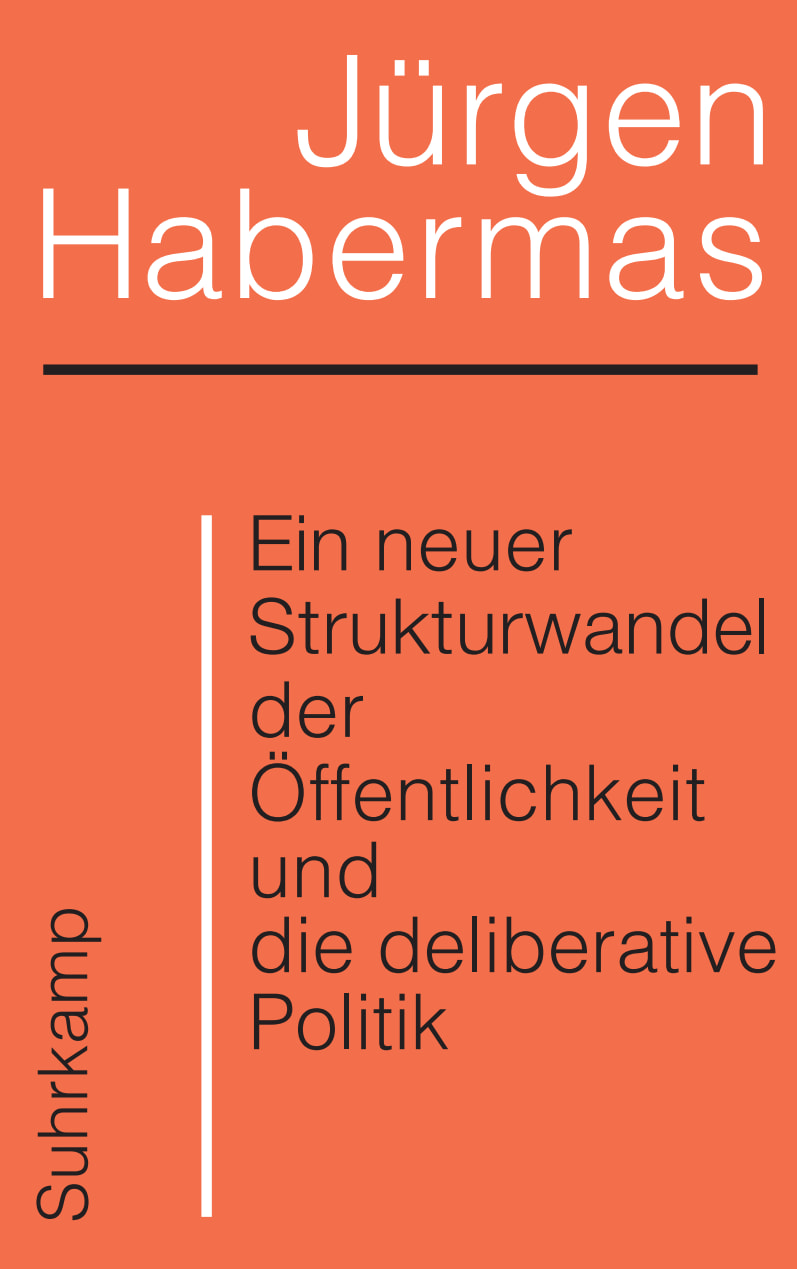
1962 erschien Strukturwandel der Öffentlichkeit, Jürgen Habermas' erstes Buch. In sozialhistorischer und begriffsgeschichtlicher Perspektive profiliert er darin einen Begriff von Öffentlichkeit, der dieser einen Platz zwischen Zivilgesellschaft und politischem System zuweist. Der Strukturwandel reihte sich alsbald ein unter die großen Klassiker der Soziologie des 20. Jahrhunderts und hat eine breite Forschung in den Geschichts- und Sozialwissenschaften angeregt. Und auch Habermas selbst hat sich in späteren Arbeiten immer wieder mit der Rolle der Öffentlichkeit für die Bestandssicherung des demokratischen Gemeinwesens beschäftigt. Angesichts einer durch die Digitalisierung veränderten Medienstruktur und der Krise der Demokratie kehrt er nun erneut zu diesem Thema zurück.

Mit den Fortschritten der künstlichen Intelligenz, der Digitalisierung der Lebenswelt und der Reduzierung des Geistes auf neuronale Prozesse erscheint der Mensch immer mehr als ein Produkt aus Daten und Algorithmen. Wir begreifen uns selbst nach dem Bild unserer Maschinen, während wir umgekehrt unsere Maschinen und unsere Gehirne zu neuen Subjekten erheben. Gegen diese Selbstverdinglichung des Menschen setzt der Philosoph und Psychiater Thomas Fuchs einen Humanismus der Verkörperung: Unsere Leiblichkeit, Lebendigkeit und verkörperte Freiheit sind die Grundlagen einer selbstbestimmten Existenz, die die neuen Technologien nur als Mittel gebraucht, statt sich ihnen zu unterwerfen.
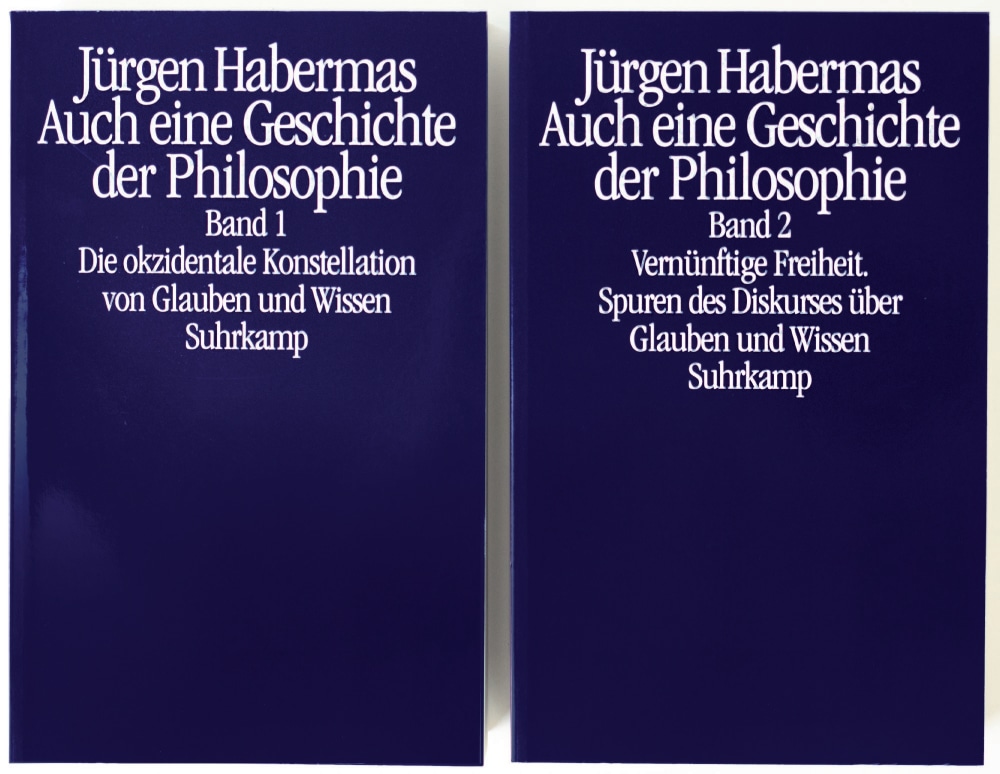
Das neue Buch von Jürgen Habermas ist auch eine Geschichte der Philosophie. Es gibt im Stil einer Genealogie darüber Auskunft, wie die heute dominanten Gestalten des westlichen nachmetaphysischen Denkens entstanden sind. Als Leitfaden dient ihm der Diskurs über Glauben und Wissen, der aus zwei starken achsenzeitlichen Traditionen im römischen Kaiserreich hervorgegangen ist. Habermas zeichnet nach, wie sich die Philosophie sukzessive aus ihrer Symbiose mit der Religion gelöst und säkularisiert hat. In systematischer Perspektive arbeitet er die entscheidenden Konflikte, Lernprozesse und Zäsuren heraus sowie die sie begleitenden Transformationen in Wissenschaft, Recht, Politik und Gesellschaft.
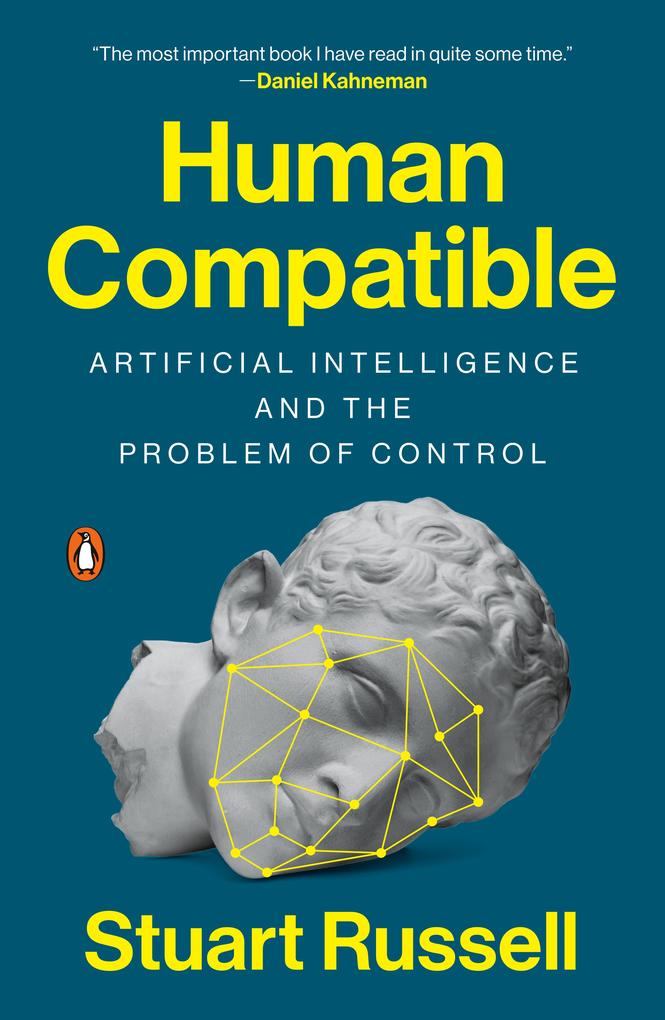
In the popular imagination, superhuman artificial intelligence is an approaching tidal wave that threatens not just jobs and human relationships, but civilization itself. Conflict between humans and machines is seen as inevitable and its outcome all too predictable.