Literarisches & Journalistisches

In How Progress Ends, Carl Benedikt Frey challenges the conventional belief that economic and technological progress is inevitable. For most of human history, stagnation was the norm, and even today progress and prosperity in the world’s largest, most advanced economies—the United States and China—have fallen short of expectations. To appreciate why we cannot depend on any AI-fueled great leap forward, Frey offers a remarkable and fascinating journey across the globe, spanning the past 1,000 years, to explain why some societies flourish and others fail in the wake of rapid technological change.

Elon Musk und Donald Trump kündigen massenhaft Verwaltungsmitarbeitern, um einen KI-Staat zu errichten. Tech-CEOs verkaufen künstliche Intelligenz als Heilsbringer für die größten Probleme der Menschheit, obwohl die entsprechende Industrie auf Ausbeutung und Menschenverachtung beruht. Warum lässt sich die Öffentlichkeit durch Spekulation über Erlösung oder Auslöschung durch KI von den erheblichen Schäden durch KI in unserer Gegenwart ablenken? Wie erkennen wir die zunehmend faschistischen Tendenzen, die sich im Zusammenspiel von Tech-Industrie und der neuen Rechten bilden? Rainer Mühlhoff entwickelt Antworten und diskutiert Lösungsansätze.
Macht und Gewalt der neuen Fürsten. 2026. 978-3-406-83821-7. Der SPIEGEL-Bestsellerautor Giuliano da Empoli unternimmt in seinem neuen Buch eine genauso fesselnd…
AI Snake Oil
2024Confused about AI and worried about what it means for your future and the future of the world? You’re not alone. AI is everywhere—and few things are surrounded by so much hype, misinformation, and misunderstanding. In AI Snake Oil, computer scientists Arvind Narayanan and Sayash Kapoor cut through the confusion to give you an essential understanding of how AI works and why it often doesn’t, where it might be useful or harmful, and when you should suspect that companies are using AI hype to sell AI snake oil—products that don’t work, and probably never will.

Digitale Monopole bringen immer größere Teile unserer Lebenswelt unter ihre Kontrolle. Die Plattformen dominieren zunehmend die politische Meinungsbildung und schaffen zugleich unsere freie Marktwirtschaft ab. Digitalexperte Martin Andree zeigt messerscharf, wie weit die feindliche Übernahme unserer Gesellschaft durch die Tech-Giganten schon fortgeschritten ist – und wie wir uns das Internet zurückerobern können.
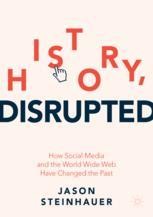
The Internet has changed the past. Social media, Wikipedia, mobile networks, and the viral and visual nature of the Web have inundated the public sphere with historical information and misinformation, changing what we know about our history and History as a discipline. This is the first book to chronicle how and why it matters. Why does History matter at all? What role do history and the past play in our democracy? Our economy? Our understanding of ourselves? How do questions of history intersect with today’s most pressing debates about technology; the role of the media; journalism; tribalism; education; identity politics; the future of government, civilization, and the planet? At the start of a new decade, in the midst of growing political division around the world, this information is critical to an engaged citizenry. As we collectively grapple with the effects of technology and its capacity to destabilize our societies, scholars, educators and the general public should be aware of how the Web and social media shape what we know about ourselves - and crucially, about our past.

In zehn hochkonzentrierten Kapiteln legt Juliane Rebentisch Hannah Arendts politische Philosophie der Pluralität frei und diskutiert sie im Horizont gegenwärtiger Debatten. Politik und Wahrheit, Flucht und Staatenlosigkeit, Sklaverei und Rassismus, Kolonialismus und Nationalsozialismus, Moral und Erziehung, Diskriminierung und Identität sowie Kapitalismus und Demokratie sind die Stichworte der entsprechenden Auseinandersetzungen. Indem sie den Fokus auf das Motiv der Pluralität legt, lässt Rebentisch in diesen unterschiedlichen thematischen Kontexten jeweils den Zusammenhang von Arendts Gesamtwerk ebenso greifbar werden wie die Widersprüche, die es durchziehen.

1962 erschien Strukturwandel der Öffentlichkeit, Jürgen Habermas' erstes Buch. In sozialhistorischer und begriffsgeschichtlicher Perspektive profiliert er darin einen Begriff von Öffentlichkeit, der dieser einen Platz zwischen Zivilgesellschaft und politischem System zuweist. Der Strukturwandel reihte sich alsbald ein unter die großen Klassiker der Soziologie des 20. Jahrhunderts und hat eine breite Forschung in den Geschichts- und Sozialwissenschaften angeregt. Und auch Habermas selbst hat sich in späteren Arbeiten immer wieder mit der Rolle der Öffentlichkeit für die Bestandssicherung des demokratischen Gemeinwesens beschäftigt. Angesichts einer durch die Digitalisierung veränderten Medienstruktur und der Krise der Demokratie kehrt er nun erneut zu diesem Thema zurück.

Mit seinem Unvollständigkeitssatz stürzte Kurt Gödel die Mathematik in ihre schwerste Krise: Er entdeckte, dass jedes sinnvolle logische System Sätze enthalten muss, die wahr, aber niemals beweisbar sind. Stephen Budiansky erzählt das Leben des brillanten Denkers – vom Wien der Vorkriegszeit über Gödels Flucht in die USA bis zu seinem neuen Wirkungskreis in Princeton, wo er auf Albert Einstein trifft, mit dem er später eng befreundet war. Reise zu den Grenzen der Vernunft kann sich erstmals auf Gödels vollständigen Nachlass stützen und erkundet so auch die lähmenden Anfälle von Paranoia, die diesen genialen, aber zerquälten Menschen zuletzt das Leben kosten sollten.

Mensch oder Algorithmus – Wer entscheidet im Zeitalter Künstlicher Intelligenz über unsere Zukunft? Überwältigend groß ist schon jetzt die Macht der digitalen Konzerne im Silicon Valley und damit die Bedrohung für Demokratie und Freiheit. Paul Nemitz und Matthias Pfeffer zeigen eindrücklich, wie die derzeitigen Versuche ethischer Regulierung von Künstlicher Intelligenz zu kurz greifen. Nemitz ist Mitglied der Datenethikkommission der Bundesregierung und war maßgeblich verantwortlich für die Einführung der EU-Datenschutzgrundverordnung. Pfeffer beschäftigt sich als freier TV-Journalist und Produzent mit dem Thema Künstliche Intelligenz.

Mit den Fortschritten der künstlichen Intelligenz, der Digitalisierung der Lebenswelt und der Reduzierung des Geistes auf neuronale Prozesse erscheint der Mensch immer mehr als ein Produkt aus Daten und Algorithmen. Wir begreifen uns selbst nach dem Bild unserer Maschinen, während wir umgekehrt unsere Maschinen und unsere Gehirne zu neuen Subjekten erheben. Gegen diese Selbstverdinglichung des Menschen setzt der Philosoph und Psychiater Thomas Fuchs einen Humanismus der Verkörperung: Unsere Leiblichkeit, Lebendigkeit und verkörperte Freiheit sind die Grundlagen einer selbstbestimmten Existenz, die die neuen Technologien nur als Mittel gebraucht, statt sich ihnen zu unterwerfen.

Das neue Buch von Jürgen Habermas ist auch eine Geschichte der Philosophie. Es gibt im Stil einer Genealogie darüber Auskunft, wie die heute dominanten Gestalten des westlichen nachmetaphysischen Denkens entstanden sind. Als Leitfaden dient ihm der Diskurs über Glauben und Wissen, der aus zwei starken achsenzeitlichen Traditionen im römischen Kaiserreich hervorgegangen ist. Habermas zeichnet nach, wie sich die Philosophie sukzessive aus ihrer Symbiose mit der Religion gelöst und säkularisiert hat. In systematischer Perspektive arbeitet er die entscheidenden Konflikte, Lernprozesse und Zäsuren heraus sowie die sie begleitenden Transformationen in Wissenschaft, Recht, Politik und Gesellschaft.
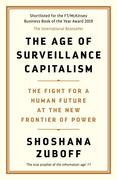
The challenges to humanity posed by the digital future, the first detailed examination of the unprecedented form of power called "surveillance capitalism," and the quest by powerful corporations to predict and control us.The heady optimism of the Internet's early days is gone. Technologies that were meant to liberate us have deepened inequality and stoked divisions. Tech companies gather our information online and sell it to the highest bidder, whether government or retailer. Profits now depend not only on predicting our behaviour but modifying it too. How will this fusion of capitalism and the digital shape our values and define our future?Shoshana Zuboff shows that we are at a crossroads. We still have the power to decide what kind of world we want to live in, and what we decide now will shape the rest of the century. Our choices: allow technology to enrich the few and impoverish the many, or harness it and distribute its benefits. The Age of Surveillance Capitalism is a deeply-reasoned examination of the threat of unprecedented power free from democratic oversight. As it explores this new capitalism's impact on society, politics, business, and technology, it exposes the struggles that will decide both the next chapter of capitalism and the meaning of information civilization. Most critically, it shows how we can protect ourselves and our communities and ensure we are the masters of the digital rather than its slaves.
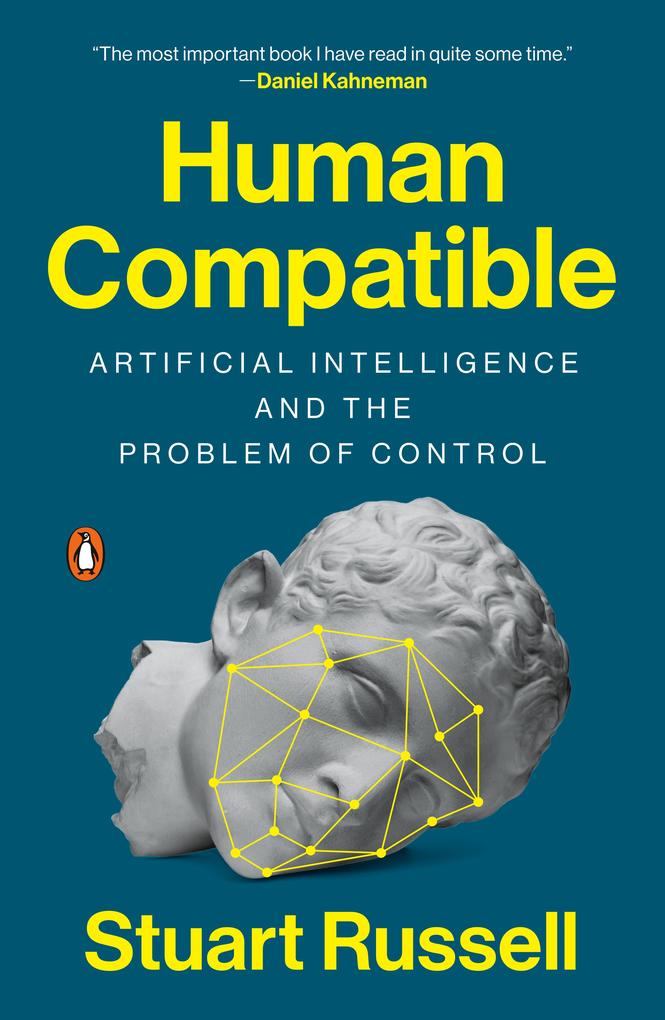
In the popular imagination, superhuman artificial intelligence is an approaching tidal wave that threatens not just jobs and human relationships, but civilization itself. Conflict between humans and machines is seen as inevitable and its outcome all too predictable.
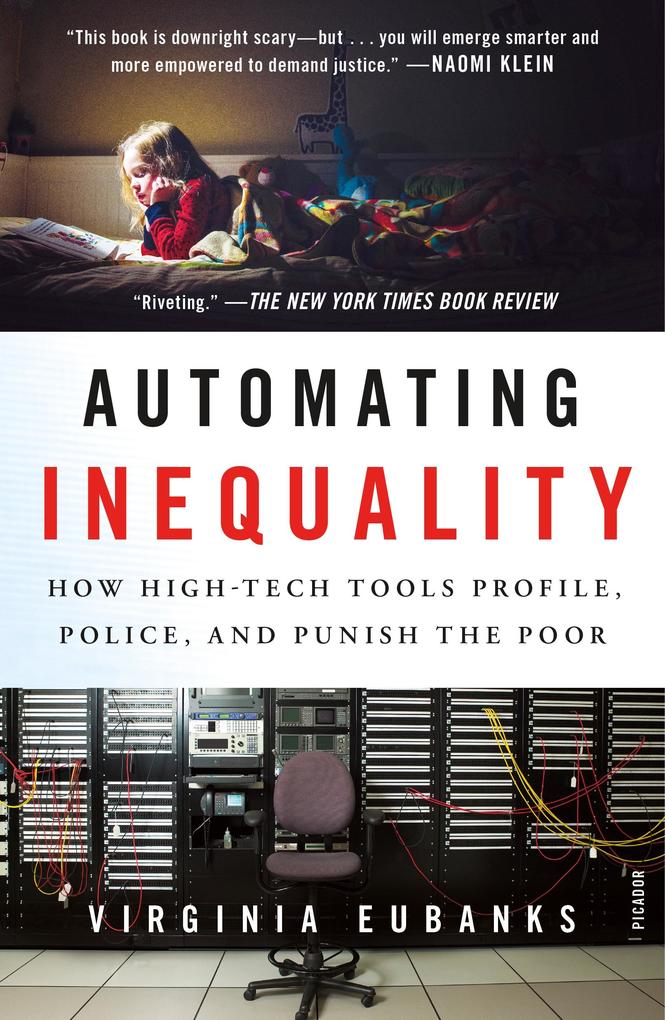
The State of Indiana denies one million applications for healthcare, foodstamps and cash benefits in three years—because a new computer system interprets any mistake as “failure to cooperate.” In Los Angeles, an algorithm calculates the comparative vulnerability of tens of thousands of homeless people in order to prioritize them for an inadequate pool of housing resources. In Pittsburgh, a child welfare agency uses a statistical model to try to predict which children might be future victims of abuse or neglect.

To Save Everything, Click Here
27. Juni 2017In the very near future, “smart” technologies and “big data” will allow us to make large-scale and sophisticated interventions in politics, culture, and everyday life. Technology will allow us to solve problems in highly original ways and create new incentives to get more people to do the right thing. But how will such “solutionism” affect our society, once deeply political, moral, and irresolvable dilemmas are recast as uncontroversial and easily manageable matters of technological efficiency? What if some such problems are simply vices in disguise? What if some friction in communication is productive and some hypocrisy in politics necessary? The temptation of the digital age is to fix everything — from crime to corruption to pollution to obesity — by digitally quantifying, tracking, or gamifying behavior. But when we change the motivations for our moral, ethical, and civic behavior we may also change the very nature of that behavior. Technology, Evgeny Morozov proposes, can be a force for improvement — but only if we keep solutionism in check and learn to appreciate the imperfections of liberal democracy. Some of those imperfections are not accidental but by design.

Hannah Arendt dachte zeitlebens im Horizont Sokrates'. Schon in den amerikanischen Anfängen stellte sie den Lehrer Platons in den Mittelpunkt ihrer Versuche, ein politisch relevantes und persönlich haltbares Denken für die Moderne zu begründen. Meisterhaft entfaltet diese Vorlesung aus den 50er Jahren eine Apologie der menschlichen Pluralität. So wendet sich Arendt gegen die platonische Versuchung, der Relativität der möglichen Wahrheiten mit der absoluten Autorität eines wegweisenden Denkansatzes begegnen zu wollen. Entscheidend ist für Arendt der innere Dialog, den Sokrates philosophisch initiierte. Zudem hebt sie die Kommunikation unter Bürgern und Freunden hervor, die im Austausch der Meinungen gemeinsame Perspektiven der Weltgestaltung eröffnen könne. In den Erinnerungen »In Hannah Arendts Seminar« berichtet ihr letzter Assistent Jerome Kohn, wie sich entlang platonischer Texte das gemeinsame Nachdenken mit der Philosophin an der New School of Social Research gestaltete.

Wolfgang Hoffmann-Riem behandelt in seiner interdisziplinär ausgerichteten Monographie aktuelle Grundsatzfragen der Setzung und Anwendung von Recht mit dem Blick auf seine Bedeutung für soziale und technische Innovationen. Die Besonderheiten von "Innovationen durch Recht" und von "Innovationen im Recht" werden an verschiedenen rechtlichen Instrumenten sowie in Beispielsfeldern aufgezeigt.
A New York Times BestsellerFrom one of our leading technology thinkers and writers, a guide through the twelve technological imperatives that will shape the next thirty years and transform our lives Much of what will happen in the next thirty years is inevitable, driven by technological trends that are already in motion. In this fascinating, provocative new book, Kevin Kelly provides an optimistic road map for the future, showing how the coming changes in our livesfrom virtual reality in the home to an on-demand economy to artificial intelligence embedded in everything we manufacturecan be understood as the result of a few long-term, accelerating forces. Kelly both describes these deep trendsinteracting, cognifying, flowing, screening, accessing, sharing, filtering, remixing, tracking, and questioningand demonstrates how they overlap and are codependent on one another. These larger forces will completely revolutionize the way we buy, work, learn, and communicate with each other. By understanding and embracing them, says Kelly, it will be easier for us to remain on top of the coming wave of changes and to arrange our day-to-day relationships with technology in ways that bring forth maximum benefits. Kellys bright, hopeful book will be indispensable to anyone who seeks guidance on where their business, industry, or life is headingwhat to invent, where to work, in what to invest, how to better reach customers, and what to begin to put into placeas this new world emerges.
This seminal book injects the topic of superintelligence into the academic and popular mainstream. What happens when machines surpass humans in general intelligence? Will artificial agents save or destroy us? In a tour de force of analytic thinking, Bostrom lays a foundation for understanding the future of humanity and intelligent life. The human brain has some capabilities that the brains of other animals lack. It is to these distinctive capabilities that our species owes its dominant position. Other animals have stronger muscles or sharper claws, but we have cleverer brains.

100 Voices
2010Drawing on 100 never-before-published interviews, Scott McConnell presents a unique portrait of a larger-than-life literary giant and a fascinating individual, Ayn Rand. Focusing on the private Rand, McConnell talked to the author's family, friends, fans, and associates, as well as Hollywood stars, university professors, fiction writers, and many more. Arranged in chronological order, these interviews cover a broad range of years, contexts, relationships, and observations on one of the most influential- and controversial-figures of the twentieth century. From Ayn Rand's youngest sister to the woman who inspired the character of Peter Keating in The Fountainhead, the subjects interviewed offer fresh, sometimes surprisingly candid, affectionate, and intriguing insights into a complex and remarkable writer, philosopher, and human being.

The noted inventor and futurist s successor to his landmark book The Singularity Is Near explores how technology will transform the human race in the decades to come Since it was first published in 2005, Ray Kurzweil s The Singularity Is Near and its vision of an exponential future have spawned a worldwide movement. Kurzweil's predictions about technological advancements have largely come true, with concepts like AI, intelligent machines, and biotechnology now widely familiar to the public.

Das sozialphilosophische Hauptwerk von Karl Popper behandelt vor allem die Geschichte des Historizismus, das heißt, die Idee eines gesetzmäßigen historischen Ablaufs, bei Platon (Band I) sowie bei Hegel, Marx und deren Nachfolgern (Band II). Es enthält außerdem eine Vielzahl von Erörterungen über erkenntnistheoretische, philosophische, ethische und politische Fragen, die bis heute von brennender Aktualität sind. Die Theorie der offenen Gesellschaft, also die ständige schrittweise Verbesserung von Institutionen in parlamentarisch-demokratischen Gesellschaften, ist in diesen beiden Bänden so gründlich entwickelt, dass alle an der Begründung und Weiterentwicklung von Zivilgesellschaften interessierten Personen sich mit ihr auseinandersetzen sollten.

VON DEN VERSCHIEDENEN RASSEN DER MENSCHEN 1) Von der Verschiedenheit der Rassen... | Buch von Immanuel Kant versandkostenfrei & direkt vom Verlag kaufen

An important literary and philosophical figure, Georges Bataille has had a significant influence on other French writers, such as Foucault, Derrida and Baudrillard. The Thirst for Annihilation is the first book in English to respond to Bataille's writings. In no way, though, is Nick Land's book an attempt to appropriate Bataille's writings to a secular intelligibility or to compromise with the aridity of academic discourse - rather, it is written as a communion . Theoretical issues in philosophy, sociology, psychodynamics, politics and poetry are discussed, but only as stepping stones into the deep water of textual sacrifice where words pass over into the broken voice of death. Cultural modernity is diagnosed down to its Kantian bedrock with its transcendental philosophy of the object, but Bataille's writings cut violently across this tightly disciplined reading to reveal the strong underlying currents that bear us towards chaos and dissolution - the violent impulse to escape, the thirst for annihilation.