Literarisches & Journalistisches
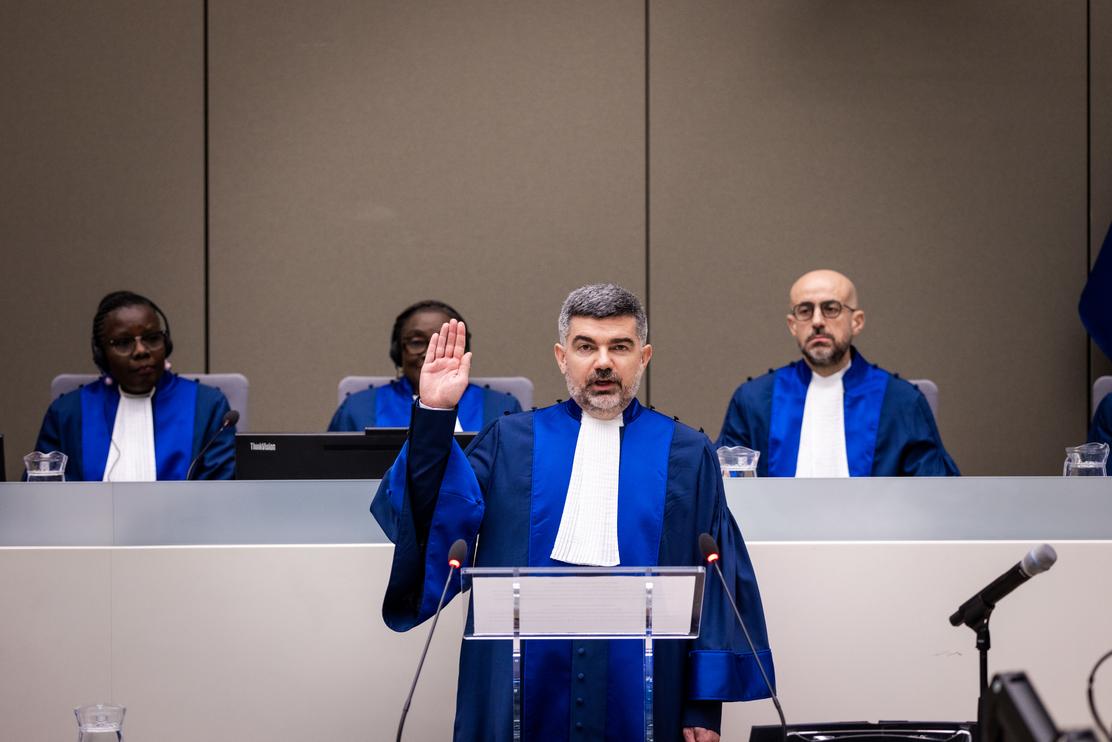
Nicolas Guillou, French ICC judge sanctioned by the US: 'You are effectively blacklisted by much of the world's banking system'
19. November, 2025Six judges and three prosecutors at the International Criminal Court have been sanctioned by the Trump administration. In an interview with Le Monde, Guillou discusses the impact of these measures on his work and daily life.
Global Media Law: Regulierung von Plattformen gefordert
10. November 2025Bei der Global Media Law Konferenz in Berlin diskutierten Vertreterinnen und Vertreter aus Politik, Wirtschaft, Wissenschaft und Gesellschaft über die Verantwortung der Tech-Firmen.
The Normative Power of Artificial Intelligence
11. Oktober, 2023Artificial intelligence technologies are spreading across society. Generative systems, such as ChatGPT and DALL-E, provide only some examples of the expanding consumption and commodification of artificial intelligence applications in daily life. Nonetheless, the extensive trust and reliance on these technologies in public and private sectors is raising questions for the rule of law. Artificial intelligence technologies are not only mere tools which challenge the protection of fundamental rights when these systems moderate online speech, check employment performances in the workplace, and evaluate credit scores. Particularly, machine learning technologies also contribute to creating norms and rules shaping the enforcement of their functions, thus defining another generative layer of normativity competing with the rule of law in the algorithmic society. This work argues that artificial intelligence systems, particularly machine learning, develop norms by experience and learning within an opaque, technical space. The norms governing these systems are not always immutable but shaped across time. In the algorithmic society, code is not only law but also a source of law. The consolidation of this normative power, or the rule of tech, raises questions for constitutional democracies that are already struggling with solutions to limit other forms of normativity, primarily the predominance of online platforms in the setting of transnational private standards. This plurality of sources has put the rule of law under pressure. The expansion of the rule of tech as a source of norms leads to addressing the spaces for the rule of law and the limits of powers in the algorithmic society, as underlined by the European regulatory approach on artificial intelligence. Within this framework, this work analyses the challenges raised by the normative power of artificial intelligence systems and examines the spaces for the rule of law in the algorithmic society.

Umstrittener 4-Milliarden-Deal: Macht sich das Innenministerium von Oracle abhängig?
6. September 2023Die Bundesverwaltung schloss jüngst einen neuen Vertrag in Milliardenhöhe mit dem US-Datenbankanbieter ab. Das Budget für eigene Alternativlösungen hingegen soll halbiert werden.

The Dutch tax authority ruined thousands of lives after using an algorithm to spot suspected benefits fraud — and critics say there is little stopping it from happening again.
This report presents the first published analysis of the Europol Innovation Lab’s Observatory function, focusing on deepfakes, the technology behind them and their potential impact on law enforcement and EU citizens. Deepfake technology uses Artificial Intelligence to audio and audio-visual content. Deepfake technology can produce content that convincingly shows people saying or doing things they never did, or create personas that never existed in the first place. To date, the Europol Innovation Lab has organised three strategic foresight activities with EU Member State law enforcement agencies and other experts. During strategic foresight activities conducted by the Europol Innovation Lab, over 80 law enforcement experts identified and analysed the trends and technologies they believed would impact their work until 2030. These sessions showed that one of the most worrying technological trends is the evolution and detection of deepfakes, as well as the need to address disinformation more generally. The findings in this report are the result of extensive desk research supported by research provided by partner organisations, expert consultation, and the strategic foresight activities. Those workshops provided the initial input for this report. Furthermore, the findings are the result of extensive desk research supported by research provided by partner organisations, expert consultation and the strategic foresight activities conducted by the Europol Innovation Lab. Strategic foresight and scenario methods offer a way to understand and prepare for the potential impact of new technologies on law enforcement. The Europol Innovation Lab’s Observatory function monitors technological developments that are relevant for law enforcement and reports on the risks, threats and opportunities of these emerging technologies.
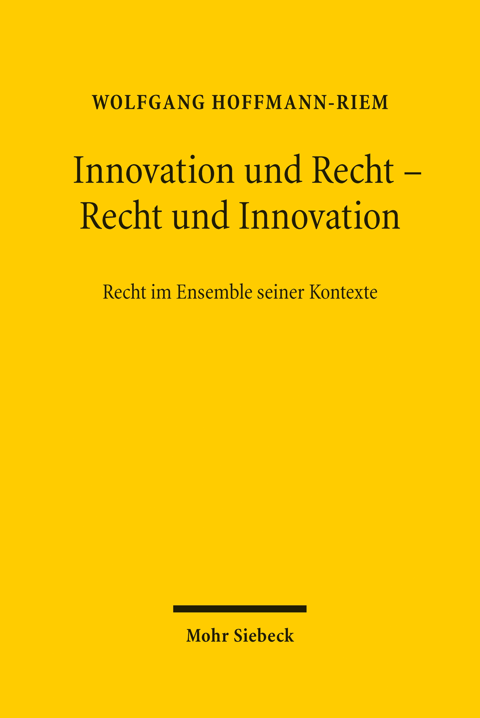
Wolfgang Hoffmann-Riem behandelt in seiner interdisziplinär ausgerichteten Monographie aktuelle Grundsatzfragen der Setzung und Anwendung von Recht mit dem Blick auf seine Bedeutung für soziale und technische Innovationen. Die Besonderheiten von "Innovationen durch Recht" und von "Innovationen im Recht" werden an verschiedenen rechtlichen Instrumenten sowie in Beispielsfeldern aufgezeigt.
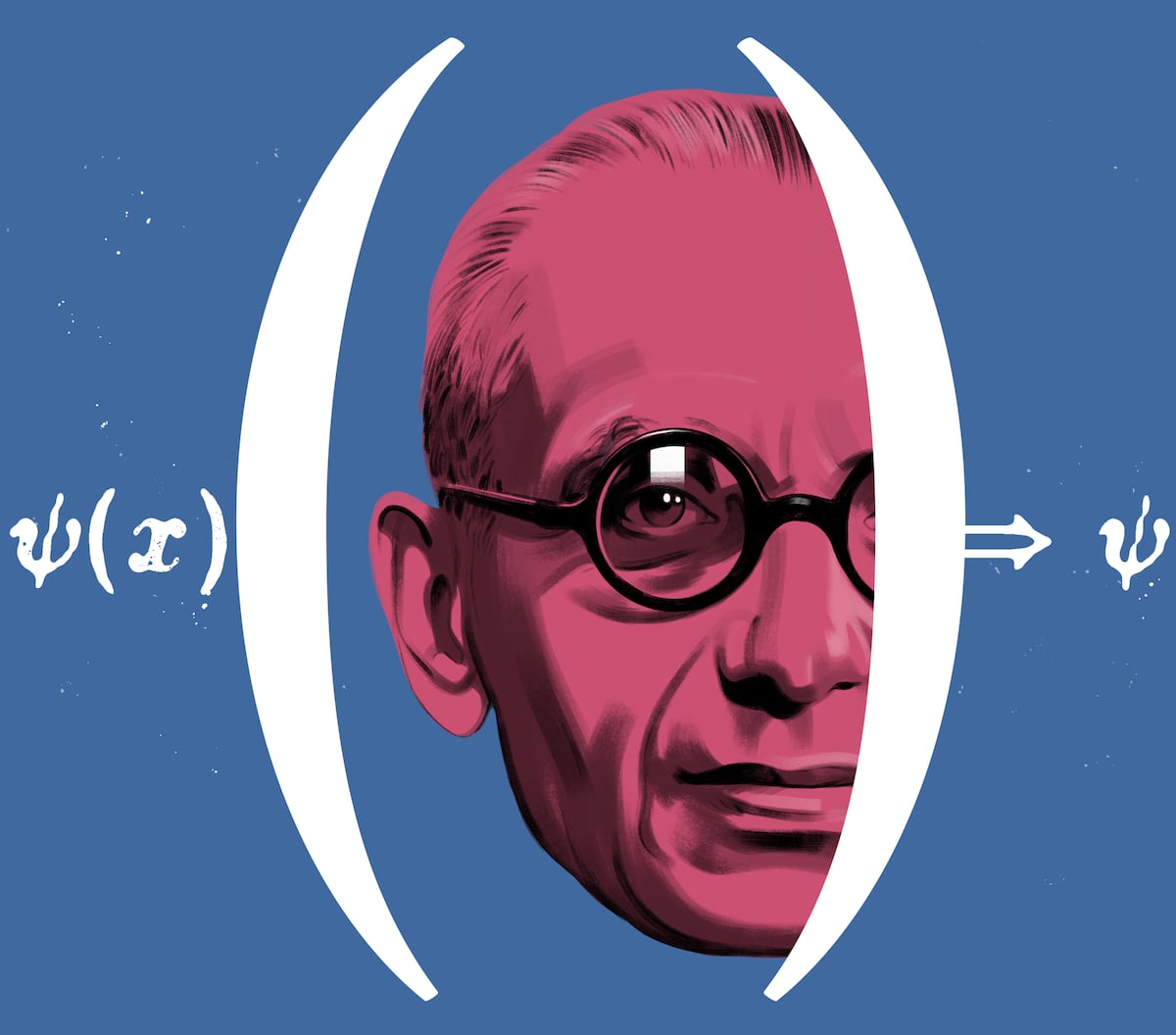
Gödel’s Loophole
01. August, 2012The mathematician and philosopher Kurt Gödel reportedly discovered a deep logical contradiction in the US Constitution. What was it? In this paper, the author revisits the story of Gödel’s discovery and identifies one particular “design defect” in the Constitution that qualifies as a “Gödelian” design defect. In summary, Gödel’s loophole is that the amendment procedures set forth in Article V self-apply to the constitutional statements in Article V themselves, including the entrenchment clauses in Article V. Furthermore, not only may Article V itself be amended, but it may also be amended in a downward direction (i.e., through an “anti-entrenchment” amendment making it easier to amend the Constitution). Lastly, the Gödelian problem of self-amendment or anti-entrenchment is unsolvable. In addition, the author identifies some “non-Gödelian” flaws or “design defects” in the Constitution and explains why most of these miscellaneous design defects are non-Gödelian or non-logical flaws.

(1) Die Umweltpolitik der Union trägt zur Verfolgung der nachstehenden Ziele bei: - Erhaltung und Schutz der Umwelt sowie Verbesserung ihrer Qualität; - Schutz der menschlichen Gesundheit; - umsichtige und rationelle Verwendung der natürlichen Ressourcen; - Förderung von Maßnahmen auf internationaler Ebene zur Bewältigung regionaler oder globaler Umweltprobleme und insbesondere zur Bekämpfung des Klimawandels. (2) Die Umweltpolitik der Union zielt unter Berücksichtigung der unterschiedlichen Gegebenheiten in den einzelnen Regionen der Union auf ein hohes Schutzniveau ab. Sie beruht auf den Grundsätzen der Vorsorge und Vorbeugung, auf dem Grundsatz, Umweltbeeinträchtigungen mit Vorrang an ihrem Ursprung zu bekämpfen, sowie auf dem Verursacherprinzip. Im Hinblick hierauf umfassen die den Erfordernissen des Umweltschutzes entsprechenden Harmonisierungsmaßnahmen gegebenenfalls eine Schutzklausel, mit der die Mitgliedstaaten ermächtigt werden, aus nicht wirtschaftlich bedingten umweltpolitischen Gründen vorläufige Maßnahmen zu treffen, die einem Kontrollverfahren der Union unterliegen. (3) Bei der Erarbeitung ihrer Umweltpolitik berücksichtigt die Union - die verfügbaren wissenschaftlichen und technischen Daten; - die Umweltbedingungen in den einzelnen Regionen der Union; - die Vorteile und die Belastung aufgrund des Tätigwerdens bzw. eines Nichttätigwerdens; - die wirtschaftliche und soziale Entwicklung der Union insgesamt sowie die ausgewogene Entwicklung ihrer Regionen. (4) Die Union und die Mitgliedstaaten arbeiten im Rahmen ihrer jeweiligen Befugnisse mit dritten Ländern und den zuständigen internationalen Organisationen zusammen. Die Einzelheiten der Zusammenarbeit der Union können Gegenstand von Abkommen zwischen dieser und den betreffenden dritten Parteien sein. Unterabsatz 1 berührt nicht die Zuständigkeit der Mitgliedstaaten, in internationalen Gremien zu verhandeln und internationale Abkommen zu schließen.
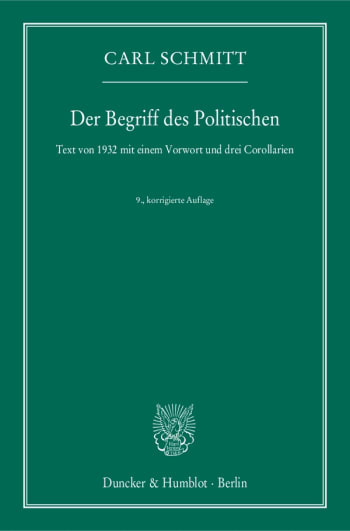
»Es soll [...] ein Rahmen für bestimmte rechtswissenschaftliche Fragen abgesteckt werden, um eine verwirrte Thematik zu ordnen und eine Topik ihrer Begriffe zu finden. Das ist eine Arbeit, die nicht mit zeitlosen Wesensbestimmungen anfangen kann, sondern zunächst einmal mit Kriterien ansetzt, um den Stoff und die Situation nicht aus den Augen zu verlieren. Hauptsächlich handelt es sich dabei um das Verhältnis und die gegenseitige Stellung der Begriffe Staatlich und Politisch auf der einen, Krieg und Feind auf der anderen Seite, um ihren Informationsgehalt für dieses Begriffsfeld zu erkennen.«