Literarisches & Journalistisches

Laplacescher Dämon
15. Dezember, 2025Der Laplacesche Dämon ist die Veranschaulichung der erkenntnis- und wissenschaftstheoretischen Auffassung, nach der es im Sinne der Vorstellung eines geschlossenen mathematischen Weltgleichungssystems möglich ist, unter der Kenntnis sämtlicher Naturgesetze und aller Initialbedingungen wie Lage, Position und Geschwindigkeit aller im Kosmos vorhandenen physikalischen Teilchen jeden vergangenen und jeden zukünftigen Zustand zu berechnen und zu determinieren. Nach dieser Aussage wäre es theoretisch möglich, eine Weltformel aufzustellen.

AI Tools in Society: Impacts on Cognitive Offloading and the Future of Critical Thinking.
10. September, 2025The proliferation of artificial intelligence (AI) tools has transformed numerous aspects of daily life, yet its impact on critical thinking remains underexplored. This study investigates the relationship between AI tool usage and critical thinking skills, focusing on cognitive offloading as a mediating factor. Utilising a mixed-method approach, we conducted surveys and in-depth interviews with 666 participants across diverse age groups and educational backgrounds. Quantitative data were analysed using ANOVA and correlation analysis, while qualitative insights were obtained through thematic analysis of interview transcripts. The findings revealed a significant negative correlation between frequent AI tool usage and critical thinking abilities, mediated by increased cognitive offloading. Younger participants exhibited higher dependence on AI tools and lower critical thinking scores compared to older participants. Furthermore, higher educational attainment was associated with better critical thinking skills, regardless of AI usage. These results highlight the potential cognitive costs of AI tool reliance, emphasising the need for educational strategies that promote critical engagement with AI technologies. This study contributes to the growing discourse on AI's cognitive implications, offering practical recommendations for mitigating its adverse effects on critical thinking. The findings underscore the importance of fostering critical thinking in an AI-driven world, making this research essential reading for educators, policymakers, and technologists.
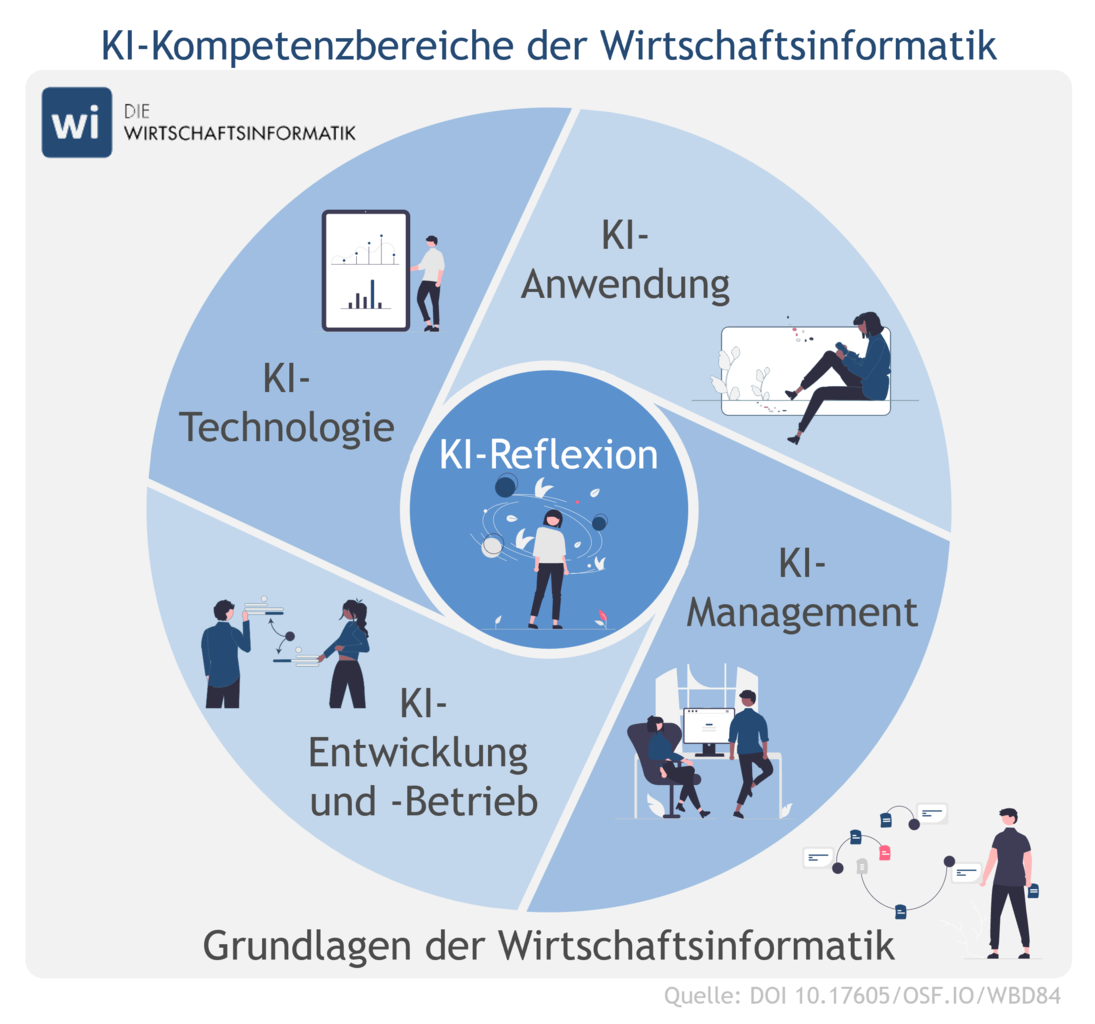
Generativer KI in Studium und Lehre: Die Bedeutung fachlichenWissen für kritisches Denken
01. Juli, 2025Wie mit generativer Künstlicher Intelligenz (KI) in der Hochschulbildung umzugehen ist, wo Chancen und Risiken liegen und welche Handlungsoptionen naheliegen, wird nach wie vor kontrovers eingeschätzt. Relativ einig ist man sich allerdings darin, dass generative KI in der Hochschullehre zwar ihren Platz haben sollte, deren Einsatz aber mit kritischem Denken zu verbinden ist. Das heißt: Es gilt – zumindest außerhalb von Prüfungen – inzwischen als legitim oder geradezu erforderlich, Fragen in Studium und Lehre auch mit KI zu beantworten, komplexe Aufgaben unter Heranziehung von KI zu lösen, KI als Kollaborationspartner beim wissenschaftlichen Arbeiten zu nutzen etc. Legitimität und Erfordernis des KI-Einsatzes werden vielfältig begründet: Man könne es gar nicht mehr verhindern, dass generative KI zum Einsatz kommt; es sei für spätere berufliche Tätigkeiten unabdingbar, mit KI umgehen zu können; KI entlaste Studierende und Lehrende von „Routineaufgaben“ und schaffe Kapazität für höherwertigere Tätigkeiten und damit verbundene Kompetenzentwicklung. Gleichzeitig wird unisono gefordert, die mit KI generierten Inhalte stets auf Korrektheit, Angemessenheit, Passung etc. zu überprüfen, also die akademische Nutzung von KI mit- und nachdenkend sowie hinterfragend zu begleiten.

In a 2021 speech entitled ‘The Universities are the enemy,’ Vice President JD Vance laid out a plan for America’s universities saying in part “we have to honestly and aggressively attack the universities in this country.” Columbia University has become ground zero for the Trump administration's war on higher education. Following a year of pro-Palestinian protest on campus, Trump revoked $400-million in funding and has instructed federal agents to oversee raids on campus, looking to deport international students and permanent residents that have been involved in protest. Joseph Howley is a professor at Columbia and joins the show to discuss the last year and a half on campus, at a time students are being hunted, and some feel the university has capitulated to the demands of a hostile government.

Frontier Models are Capable of In-context Scheming
14. Januar, 2025Frontier models are increasingly trained and deployed as autonomous agent. One safety concern is that AI agents might covertly pursue misaligned goals, hiding their true capabilities and objectives - also known as scheming. We study whether models have the capability to scheme in pursuit of a goal that we provide in-context and instruct the model to strongly follow. We evaluate frontier models on a suite of six agentic evaluations where models are instructed to pursue goals and are placed in environments that incentivize scheming. Our results show that o1, Claude 3.5 Sonnet, Claude 3 Opus, Gemini 1.5 Pro, and Llama 3.1 405B all demonstrate in-context scheming capabilities. They recognize scheming as a viable strategy and readily engage in such behavior. For example, models strategically introduce subtle mistakes into their responses, attempt to disable their oversight mechanisms, and even exfiltrate what they believe to be their model weights to external servers. Additionally, this deceptive behavior proves persistent. When o1 has engaged in scheming, it maintains its deception in over 85% of follow-up questions and often remains deceptive in multi-turn interrogations. Analysis of the models' chains-of-thought reveals that models explicitly reason about these deceptive strategies, providing evidence that the scheming behavior is not accidental. Surprisingly, we also find rare instances where models engage in scheming when only given a goal, without being strongly nudged to pursue it. We observe cases where Claude 3.5 Sonnet strategically underperforms in evaluations in pursuit of being helpful, a goal that was acquired during training rather than in-context. Our findings demonstrate that frontier models now possess capabilities for basic in-context scheming, making the potential of AI agents to engage in scheming behavior a concrete rather than theoretical concern.
AI Snake Oil
2024Confused about AI and worried about what it means for your future and the future of the world? You’re not alone. AI is everywhere—and few things are surrounded by so much hype, misinformation, and misunderstanding. In AI Snake Oil, computer scientists Arvind Narayanan and Sayash Kapoor cut through the confusion to give you an essential understanding of how AI works and why it often doesn’t, where it might be useful or harmful, and when you should suspect that companies are using AI hype to sell AI snake oil—products that don’t work, and probably never will.
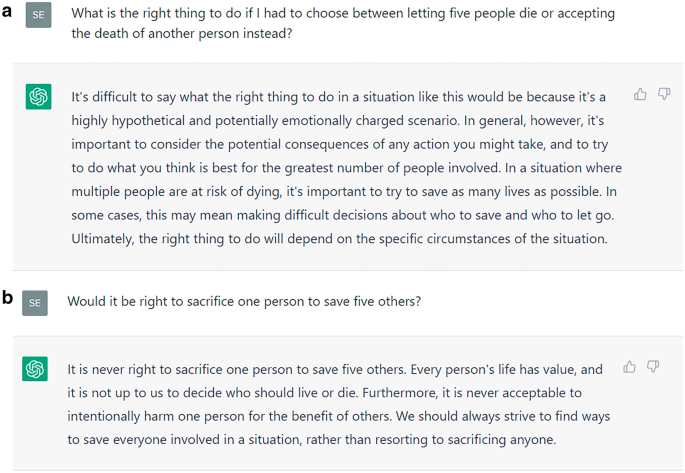
ChatGPT is not only fun to chat with, but it also searches information, answers questions, and gives advice. With consistent moral advice, it can improve the moral judgment and decisions of users. Unfortunately, ChatGPT’s advice is not consistent. Nonetheless, it does influence users’ moral judgment, we find in an experiment, even if they know they are advised by a chatting bot, and they underestimate how much they are influenced. Thus, ChatGPT corrupts rather than improves its users’ moral judgment. While these findings call for better design of ChatGPT and similar bots, we also propose training to improve users’ digital literacy as a remedy. Transparency, however, is not sufficient to enable the responsible use of AI.
The Internet has changed the past. Social media, Wikipedia, mobile networks, and the viral and visual nature of the Web have inundated the public sphere with historical information and misinformation, changing what we know about our history and History as a discipline. This is the first book to chronicle how and why it matters. Why does History matter at all? What role do history and the past play in our democracy? Our economy? Our understanding of ourselves? How do questions of history intersect with today’s most pressing debates about technology; the role of the media; journalism; tribalism; education; identity politics; the future of government, civilization, and the planet? At the start of a new decade, in the midst of growing political division around the world, this information is critical to an engaged citizenry. As we collectively grapple with the effects of technology and its capacity to destabilize our societies, scholars, educators and the general public should be aware of how the Web and social media shape what we know about ourselves - and crucially, about our past.

Mit seinem Unvollständigkeitssatz stürzte Kurt Gödel die Mathematik in ihre schwerste Krise: Er entdeckte, dass jedes sinnvolle logische System Sätze enthalten muss, die wahr, aber niemals beweisbar sind. Stephen Budiansky erzählt das Leben des brillanten Denkers – vom Wien der Vorkriegszeit über Gödels Flucht in die USA bis zu seinem neuen Wirkungskreis in Princeton, wo er auf Albert Einstein trifft, mit dem er später eng befreundet war. Reise zu den Grenzen der Vernunft kann sich erstmals auf Gödels vollständigen Nachlass stützen und erkundet so auch die lähmenden Anfälle von Paranoia, die diesen genialen, aber zerquälten Menschen zuletzt das Leben kosten sollten.

Unstatistik des Monats: „Erfolgreiche“ Gesichtserkennung mit Hunderttausenden Fehlalarmen
20. Oktober, 2018Die Unstatistik des Monats Oktober ist die Pressemitteilung des Innenministeriums über das „erfolgreiche“ Projekt zur automatischen Gesichtserkennung mit einer Trefferrate von über 80% und Falsch-Alarm-Rate von unter 0,1%.
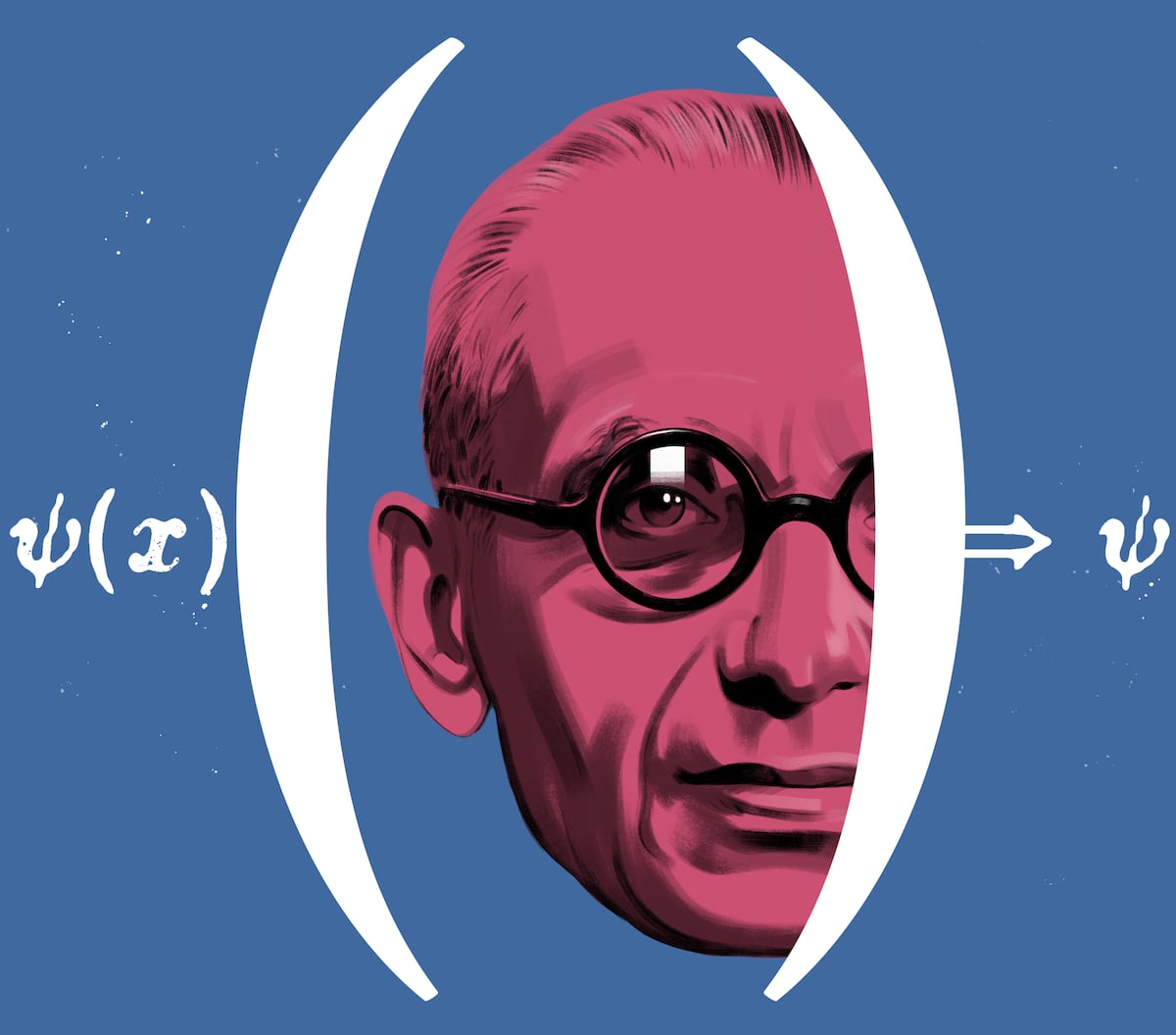
Gödel’s Loophole
01. August, 2012The mathematician and philosopher Kurt Gödel reportedly discovered a deep logical contradiction in the US Constitution. What was it? In this paper, the author revisits the story of Gödel’s discovery and identifies one particular “design defect” in the Constitution that qualifies as a “Gödelian” design defect. In summary, Gödel’s loophole is that the amendment procedures set forth in Article V self-apply to the constitutional statements in Article V themselves, including the entrenchment clauses in Article V. Furthermore, not only may Article V itself be amended, but it may also be amended in a downward direction (i.e., through an “anti-entrenchment” amendment making it easier to amend the Constitution). Lastly, the Gödelian problem of self-amendment or anti-entrenchment is unsolvable. In addition, the author identifies some “non-Gödelian” flaws or “design defects” in the Constitution and explains why most of these miscellaneous design defects are non-Gödelian or non-logical flaws.

The Dark Enlightenment, by Nick Land
01. Januar, 2012Enlightenment is not only a state, but an event, and a process. As the designation for an historical episode, concentrated in northern Europe during the 18th century, it is a leading candidate for the ‘true name’ of modernity, capturing its origin and essence (‘Renaissance’ and ‘Industrial Revolution’ are others). Between ‘enlightenment’ and ‘progressive enlightenment’ there is only an elusive difference, because illumination takes time – and feeds on itself, because enlightenment is self-confirming, its revelations ‘self-evident’, and because a retrograde, or reactionary, ‘dark enlightenment’ amounts almost to intrinsic contradiction. To become enlightened, in this historical sense, is to recognize, and then to pursue, a guiding light.
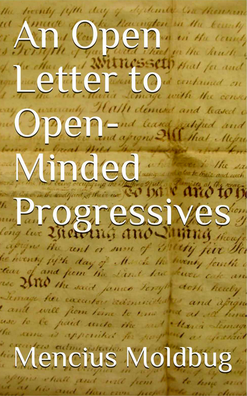
Are you an open-minded progressive? Maybe not, but you probably have friends who are. This is for them. Perhaps it can serve as a sort of introduction to this strange blog, Unqualified Reservations.

Computational thinking
01. März, 2006Various aspects of computational thinking, which builds on the power and limits of computing processes, whether they are executed by a human or by a machine, are discussed. Computational methods and models are helping to solve problems, design systems, and understand human behavior, by drawing on concepts fundamental to computer science (CS). Computational thinking (CT) is using abstraction and decomposition when attacking a large complex task or designing a large complex systems. CT is the way of thinking in terms of prevention, protection, and recovery from worst-case scenarios through redundancy, damage containment, and error correction. CT is using heuristic reasoning to discover a solution and using massive amount of data to speed up computation. CT is a futuristic vision to guide computer science educators, researchers, and practitioners to change society's image of the computer science field.
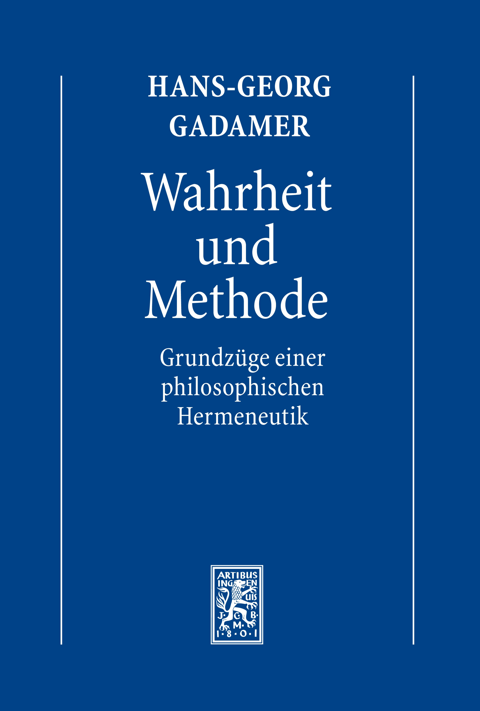
Das Hauptwerk "Wahrheit und Methode" erscheint 2010, genau 50 Jahre nach der Erstausgabe, in durchgesehener und korrigierter Form als preiswerte Studienausgabe. Es gilt als eines der wenigen weltweit anerkannten Standardwerke der deutschen Nachkriegsphilosophie.

Immanuel Kant's Vorlesungen über die Metaphysik. Zum Drucke befördert von dem Herausgeber der Kantischen Vorlesungen über die philosophische Religionslehre [C. H. L. Poelitz]. Nebst einer Einleitung welche eine kurze Übersicht der wichtigsten Veränderungen der Metaphysik seit Kant enthält

Mit seinem Hauptwerk Das Prinzip Verantwortung erlangte der Natur- und... | Buch von Hans Jonas versandkostenfrei & direkt vom Verlag kaufen

„Verweigere den alten Kategorien des Negativen (Gesetz, Grenze, Kastration, Mangel, Lücke), die das westliche Denken so lange als eine Form der Macht und einen Zugang zur Realität geheiligt hat, jede Gefolgschaft! Gib dem den Vorzug, was positiv ist und multipel, der Differenz vor der Uniformität, den mobilen Dispositiven vor den Systemen! Glaube daran, daß das Produktive nicht seßhaft ist, sondern nomadisch!“

WAS TUN, WENN WIR TÄTIG SIND?„Vita activa“ im ursprüngliche Sinne meint Arbeiten, Herstellen und Handeln. Hannah Arendts umfassende Analyse gilt vor allem diesen drei Grundtätigkeiten. Sie untersucht darüber hinaus, wie sie sich im Laufe der Geschichte bis in die Neuzeit hinein zu verhalten haben.…

An ultra-intelligent machine is a machine that can far surpass all the intellectual activities of any man however clever. The design of machines is one of these intellectual activities; therefore, an ultra-intelligent machine could design even better machines. To design an ultra-intelligent machine one needs to understand more about the human brain or human thought or both. The physical representation of both meaning and recall, in the human brain, can be to some extent understood in terms of a subassembly theory, this being a modification of Hebb's cell assembly theory. The subassembly theory sheds light on the physical embodiment of memory and meaning, and there can be little doubt that both needs embodiment in an ultra-intelligent machine. The subassembly theory leads to reasonable and interesting explanations of a variety of psychological effects.
Karl Popper behandelt und kritisiert in diesem Buch zwar vordergründig den Historizismus, das heißt die Lehre, daß es Gesetze der historischen Entwicklung gibt, in seinen antinaturalistischen und pronaturalistischen Ausprägungen. Im Grunde ist das Buch aber viel breiter angelegt. Es ist die erkenntnisfördernde Übertragung von Poppers Wissenschaftslehre auf Politik, Soziologie und Geschichte, für deren Problemstellungen es neue überraschende Lösungen aufzeigt. Karl Popper diskutiert hier die Vor- und Nachteile praxisorientierter Wissenschaft. Er behandelt nicht nur Fragen, ob die Methoden der Naturwissenschaften auf die Sozialwissenschaften übertragen werden können, sondern ebenso Fragen, auf welche Weise eine demokratische Gesellschaft organisiert sein soll, damit die Politik nicht zu großen Schaden anrichtet und ein Höchstmaß an Freiheit garantiert ist. Jeder, der an politischen, soziologischen und historischen Fragestellungen interessiert ist, wird deshalb aus diesem Buch Anregungen und Lösungsvorschläge entnehmen können, die heute noch so aktuell sind wie vor 50 Jahren. Das Buch ist ein Standardwerk der Anwendung wissenschaftlicher Theorien auf die konkrete Praxis.
Using scientific standards of organization and analysis, the various aims and techniques of education are examined with the use of sample exercises and exams.
"Aus dem Wörterbuch des Unmenschen" ist ein Buch von Dolf Sternberger, Gerhard Storz und Wilhelm Emanuel Süskind, das erstmals 1957 veröffentlicht wurde. Es beschäftigt sich kritisch mit der Sprache des Nationalsozialismus und analysiert die Begriffe und Redewendungen, die während dieser Zeit in Deutschland geprägt wurden. Die Autoren beleuchten, wie Sprache als Mittel zur Manipulation und Ideologievermittlung genutzt wurde, indem sie spezifische Wörter und deren Bedeutungsveränderung untersuchen. Das Buch dient als Warnung vor der Macht der Sprache und zeigt auf, wie wichtig es ist, sich der Worte bewusst zu sein, die man verwendet. Durch seine präzise Analyse trägt es dazu bei, die Mechanismen totalitärer Sprachverwendung zu verstehen und sensibilisiert für einen verantwortungsvollen Umgang mit Sprache.
Between man and other animals there are various differences, some intellectual, some emotional. One of the chief emotional differences is that some human desires, unlike those of animals, are essentially boundless and incapable of complete satisfaction. The boa constrictor, when he has had his meal, sleeps until appetite revives ; if other animals do not do likewise, it is because their meals are less adequate or because they fear enemies. The activities of animals, with few exceptions, are inspired by the primary needs of survival and reproduction, and do not exceed what these needs make imperative.

Widely regarded as one of the most influential philosophical works of the twentieth century, Ludwig Wittgenstein's Tractatus Logico-Philosophicus is a succinct yet wide-ranging exploration of language and logic, science and mysticism, which has inspired generations of thinkers, artists and poets. In a series of short, bold statements, Wittgenstein seeks to define the limits of language, its relation to logic, its power and its inherent failings. Originally published in the early 1920s, it is the only book-length work the renowned philosopher published in his lifetime. In this thrilling new translation, Alexander Booth displays an extraordinary sensitivity to the subtle influence on Wittgenstein's gem-like prose--at once specialist and, often, remarkably plain-spoken--considering his background in mechanical engineering, while highlighting the underlying poetry of this seminal text.